Monday, February 19, 2018

Self-Parking Slippers by Nissan

Nissan introduces self-parking slippers and furnishings. It’s interesting to see where self-driving and parking technology can be implemented aside from vehicles. With robots assisting in these types of work, humans can focus on providing better service to their customers. Less employees to hire for the business owner.


More on Reuter

Video on YouTube


Monday, January 30, 2017

Shape Shifting Meeting Space


Self-Assembly Lab at MIT has created a Transformable Meeting Space with Google. The woven structure made of wood and fiberglass, it folds and lifts half way when a rod is pulled and expands when it is relaxed.
For more pictures(above picture is also from following link) and information, check out:
http://www.archdaily.com/796317/mit-and-google-team-up-to-create-transformable-office-pods

Monday, July 4, 2016

Robotic Builder

BAM and Universe Architecture are building a 1:4 scale model of 'Landscape House' at the Fab City in Netherlands with a 3D printer capable of printing concrete. The bonding liquid is inorganic seawater and a magnesium-based binder. Full scale house will be presented in 2017. For more, go to:
http://www.constructionweekonline.com/article-39647-worlds-first-robotic-builder-to-enter-service/


Monday, May 2, 2016

Self-Driving Greenhouse Ball

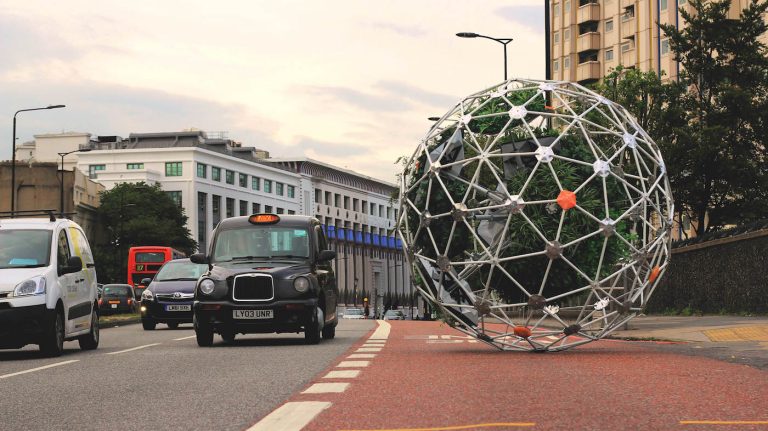
William Victor Camilleri and Danilo Sampaio, researchers at Interactive Architecture Lab at UCL Bartlett School of Architecture, designed a sphere which would roam around using sensors to find its plants' desired environmental conditions. For more info, go to:

http://hyperallergic.com/293140/a-self-driving-greenhouse-ball-could-be-the-future-of-urban-gardens/


Monday, March 28, 2016

3D Printing + Prefabrication

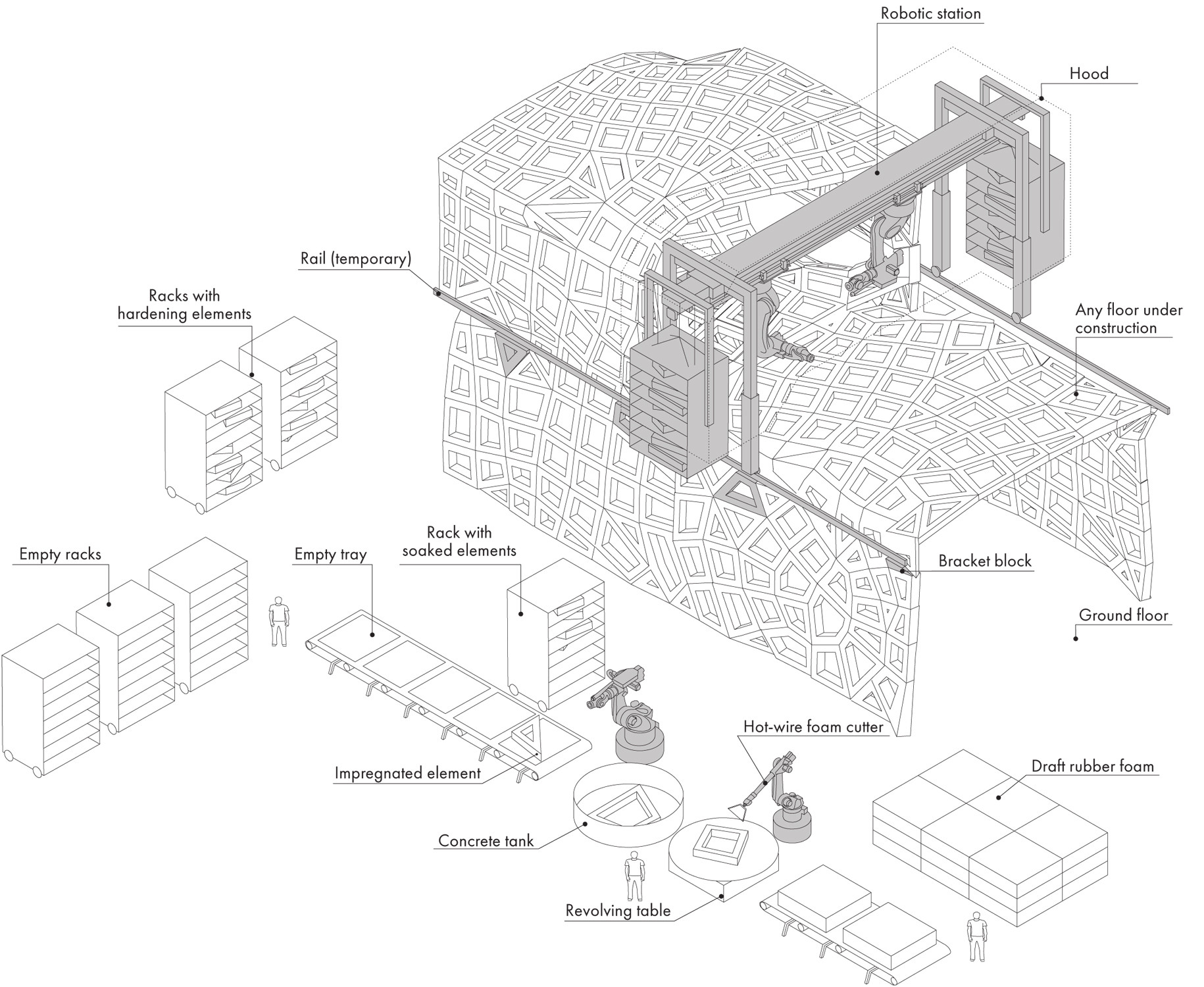
ZAarchitects introduced "Smart Masonry", mixing advantages of 3D printing and prefabricating elements. For more information, go to 
http://www.archdaily.com/609108/digitized-bricks-zaarchitects-develop-smart-masonry


Monday, November 17, 2014

Self assembly lab & Soft robotics tool kit

Skylar Tibbits's Self Assembly LAB in MIT was featured on WIRE a week ago.
http://www.wired.com/2014/11/skylar-tibbits
Looking forward to seeing self assembling architecture soon!


Soft Robotics Toolkit from Harvard was introduced a while ago. 


Now it's really a matter of scaling these up.

Tuesday, April 22, 2014

fashion, robotics, and wearable technology

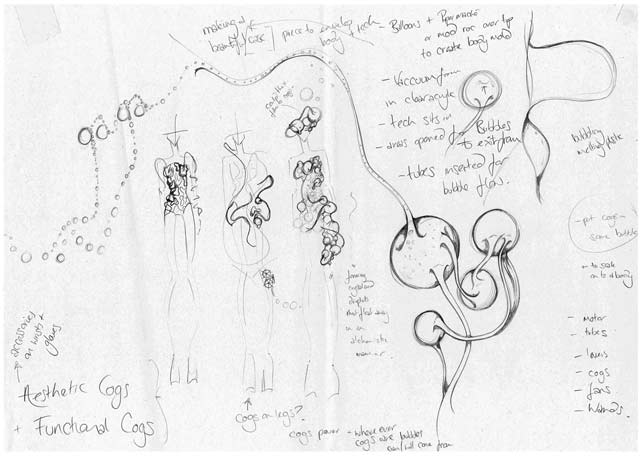
Dezeen has featured an interview with Benjamin Males of Studio XO who designed Lady Gaga's Anemone dress. http://www.dezeen.com/2014/04/21/movie-studio-xo-lady-gaga-anemone-benjamin-males/

lady gaga's anemone dress concept sketch (via Dezeen)

Cloths that can robotically fit you in any size vs. 3D printed dresses printed to your size. Which one would you prefer? If cloths can change sizes with simple button control, will it shrink to store? How would these types of clothing affect others people, environment, and technology?

Monday, February 25, 2013

Calcalist Article

Here's the link to the article related to my interview a few weeks ago with Calcalist. It's in Hebrew, so feel free to run google translate if you have language difficulties. I was pleasantly surprised to be presented with Greg Lynn in the article. He was the one who introduced me and my classmates to the subject. Omer, the journalist, had asked me to answer a couple more questions, but it seems like they ran the story before my answers reached him. Those are posted below along with the link to the article. Enjoy-

http://www.calcalist.co.il/internet/articles/0,7340,L-3596038,00.html

Q: In what ways do the use of robotics in architecture can improve our lives?

A: In my sense robotics in architecture can be tied to sustainability and inclusive design. By transforming from A type of use to B type of use, or by evolving as the user ages, we can imagine a building with multiple purposes in time sequence and use spatially. And that we would need to build on one property would create more natural ground. If used in interactive/responsive ways I believe it would be big in inclusive design, empowering people with disabilities. Easiest and currently in use items would be lighting; lights turning on by sensor. Maybe steps could move up and the user wouldn't need to step up for instance.


Q: What still need do happen for robotics in architecture to enter common use (such as in typical residential projects)?


A: At the moment I can think of three things. First, both the designer and the client need to understand how and why robotics can be useful. Second, engineers and architects need to collaborate more. Third, perhaps in consequence of the second item, for robotics in architecture to enter general use, it needs to be cost effective. One way to resolve this would be developing moduler robotic item that can be built in for residential projects, something that can be mass produce-able. 

Monday, February 4, 2013

Interview with Calcalist

I had an interview with Calcalist about a couple of hours ago. Calcalist's tech correspondant Omer Kabir contacted me a week ago requesting an interview about Robotics in Architecture. When the article is published, I will post the link here.

Below are links to my recent finds that I mentioned in the interview and some afterthoughts:


Iris van Herpen - 3d printed dress
http://www.ecouterre.com/iris-van-herpen-debuts-3d-printed-dresses-at-paris-couture-fashion-week/

Wall built by robot
http://www.sciencedaily.com/releases/2009/10/091026133016.htm

Peter Cook(of Archigram) and Colin Fourier - BIX facade
http://en.wikipedia.org/wiki/Kunsthaus_Graz

SOMA - One Ocean(thematic pavillion for Yeosu Expo. kinetic lamellas)
http://www.arcspace.com/features/soma/one-ocean/


I'm getting more interested in combining robotics with sustainablity and transformation. Sustainablity in energy saving/generating/recycling, and transformation in between two to three different programs/typologies to build less, but make the space more useful and efficient. It's a different kind of efficiency. That alone is quite exciting.

Wednesday, January 2, 2013

Hankook Tire Competition Results


This is a video clip of Hankook Tire's competition results. The clip features four finalists showing projects: Emembrane related to fuel efficiency, Magtrac related to intelligent magnetic, Motiv related to off road activities, and Tiltread related to racing cars. Each schemes present creative ways to reinvent tires by accentuating their specific goals.

Robot transforming into a car

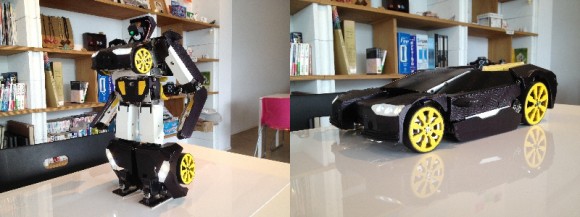
This project has been featured in Boingboing.net, Core77.com, and many more blogs and websites. It's made by Brave Robotics from Japan. The robot can transform into a car and vice versa. The link includes video of how the robot transforms and its drawings and some pictures. The current model costs about 24k usd, aiming to be made into real scale model by 2030.


http://boingboing.net/2012/12/05/transformer-robot-from-brave-r.html

http://www.braverobotics.com/history_en.html

Monday, January 3, 2011

pechakucha shanghai presentation

Pechakucha Shanghai August 5th, 2010

I presented at Pechakucha Shanghai last year on August 5th on robotics in architecture. It was more like a quick breeze through kinetic, interactive, responsive, transforming design projects. Following are some projects I introduced in the 20 slide presentation.


 Archigram's Walking City


OMA's Bordeaux House

Hoberman Associates' U2 360

Hoberman Associates' Emergent Surface

Enviu and Doll's Sustainable Dance Club

Fox Lin's Bubbles

The Living's Living Light Seoul 


Saturday, April 4, 2009

ORAMBRA


ORAMBRA - The Office for Robotic Architectural Media & Bureau for Responsive  Architecture

Tuesday, March 17, 2009

Friday, February 9, 2007

Robotics in Architecture Paper Abstract


In robotics, the background technologies on behavior, navigation and path planning have been solved using basic wheeled robots and now the roboticists are moving on to develop walking robots. If we scale up these robots there are possibilities that those robots can become architecture. This paper will first go over the technological advancement in physical and electronic network that would allow robots to come into play as architecture. Technological advancement in infrastructure, internet system, wireless power, wireless recharging system, and etc. will be looked at. Then precedents in motion architecture such as Archigram’s Walking City and metabolist architecture will be studied as historic ones, whereas Fox Lin Inc. and Chuck Hoberman’s works would be contemporary ones in motion architecture. Precedents for responsive architecture will be DeCoi’s Aegis Hyposurface, Nox’s Soft Office. Haptic technology, LED, and other strategies will be researched. How robotic architecture would be will be next. Ways of movement, how the movement would affect the space and program, the relationship of their surrounding spaces, reorganization of envelope and materiality, the atmosphere, will be studied. The design project will address the issues addressed in the previous part, then go through a feedback loop of what works better and what doesn’t in comparison to architecture in stasis and discuss the future of automated architecture.